Core Web Vitals Importance Explained
Core Web Vitals have moved from being a technical checklist to a practical indicator of how real users experience a website. When visitors land on a page, they expect it to load quickly, respond immediately, and remain visually stable. Google formalized these expectations into Core Web Vitals to ensure websites prioritize people-first experiences. Understanding the core web vitals importance helps businesses align performance, usability, and search visibility in a measurable way.
Whether you manage a small business website or a large platform, Core Web Vitals influence engagement, trust, and competitiveness in search results. They are not about chasing algorithms; they are about building fast, reliable, and user-friendly websites. This guide explains what are core web vitals, why they matter, how to approach core web vitals optimization, and how to use a core web vitals checklist to maintain long-term performance.
What Are Core Web Vitals?
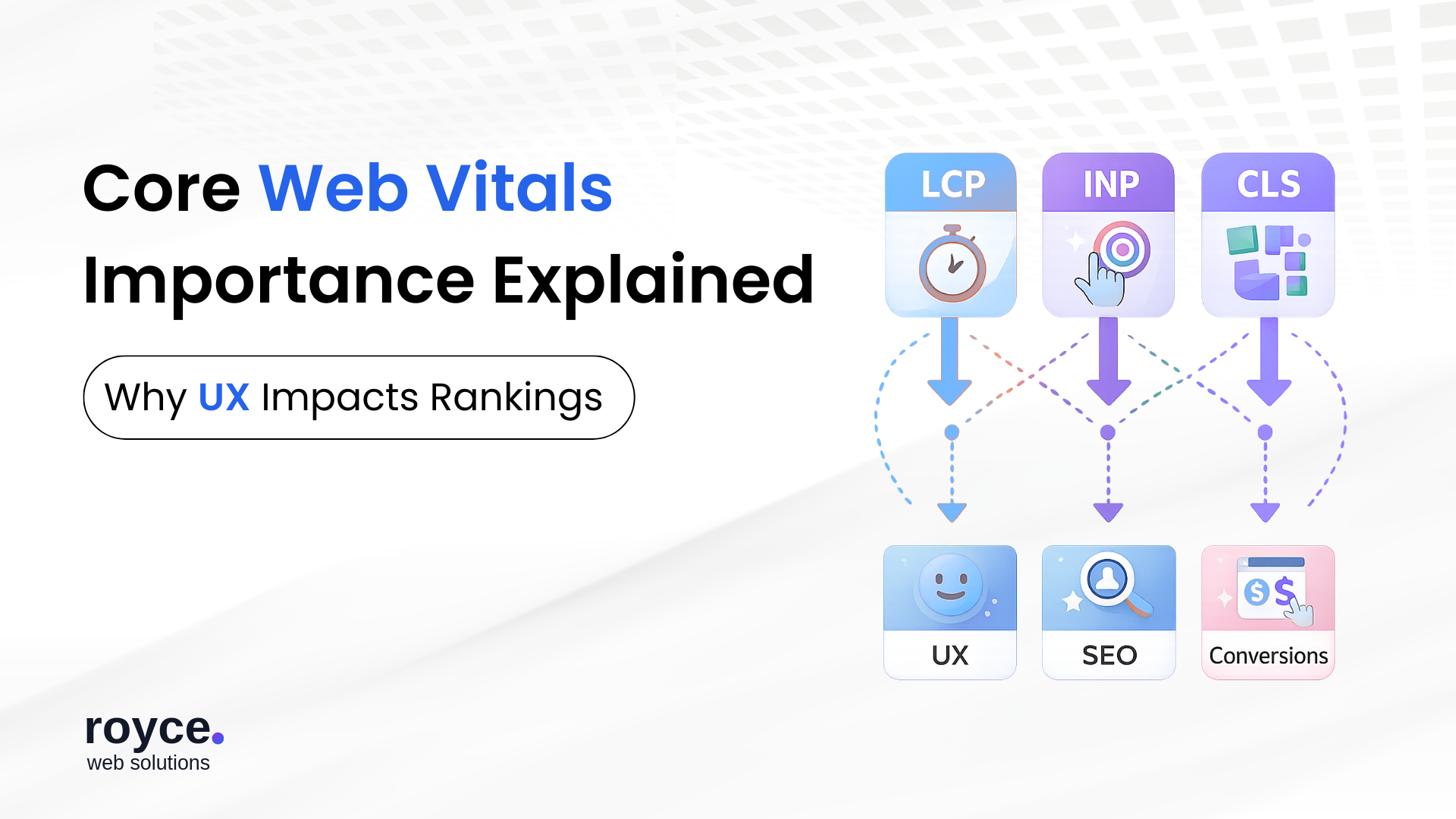
Core Web Vitals are a set of performance metrics defined by Google to measure real-world user experience. They focus on how a page loads, how it responds to interactions, and how stable it appears during loading.
Google tracks many performance signals, but only three are considered Core Web Vitals:
- Largest Contentful Paint (LCP)
- Interaction to Next Paint (INP)
- Cumulative Layout Shift (CLS)
Together, these metrics provide a practical view of user experience that goes beyond aesthetics or content alone.
Why Core Web Vitals Importance Goes Beyond SEO
The core web vitals importance lies in their ability to connect technical performance with human behavior. A slow or unstable website frustrates users, increases bounce rates, and reduces conversions. Google reflects this behavior in rankings by favoring websites that deliver smoother experiences.
From a business perspective, Core Web Vitals support:
- Better engagement
- Higher trust
- Improved conversions
- Stronger long-term SEO stability
Performance is no longer just a technical concern; it is a business outcome.
1. Largest Contentful Paint (LCP) Explained
LCP measures how quickly the main content of a page becomes visible. It represents perceived loading speed from a user’s perspective.
Good LCP Benchmarks
- Good: ≤ 2.5 seconds
- Needs improvement: 2.5–4 seconds
- Poor: > 4 seconds
What Affects LCP
- Server response time
- Image optimization
- Render-blocking scripts
- Hosting quality
Improving LCP is often the first step in core web vitals optimization because it directly impacts first impressions.
2. Interaction to Next Paint (INP)
INP measures how responsive a page feels when users interact with it. It replaced First Input Delay to reflect responsiveness across the entire page lifecycle.
Good INP Benchmarks
- Good: ≤ 200 milliseconds
- Needs improvement: 200–500 milliseconds
- Poor: > 500 milliseconds
Why INP Matters
Users expect immediate feedback when they click, tap, or scroll. Delayed interactions reduce confidence and increase frustration, especially on mobile devices.
3. Cumulative Layout Shift (CLS)
CLS measures visual stability by tracking unexpected layout shifts while a page loads.
Good CLS Benchmarks
- Good: ≤ 0.1
- Needs improvement: 0.1–0.25
- Poor: > 0.25
Common CLS Causes
- Images without defined dimensions
- Ads loading late
- Dynamic content injected above existing content
A stable layout improves readability, usability, and trust.
How Core Web Vitals Support User Experience
Core Web Vitals translate technical performance into human experience. When a website loads quickly, responds smoothly, and stays visually stable, users are more likely to explore, read, and take action.
Benefits include:
- Reduced bounce rates
- Higher engagement
- Better accessibility
- Improved perceived professionalism
This is why performance-focused websites featured on the home page often feel easier to use and more credible.
How Core Web Vitals Impact Search Rankings
Google uses Core Web Vitals as part of its page experience signals. While they are not the sole ranking factor, they help differentiate similar content.
Websites with strong content but poor performance may lose ground to competitors with comparable content and better UX. This makes core web vitals importance particularly relevant in competitive niches.
Core Web Vitals Optimization: Where to Start
Effective core web vitals optimization begins with measurement and prioritization.
Optimization Focus Areas
- Hosting and server performance
- Image compression and formats
- Script management
- Layout stability fixes
Many businesses address these through strategic website design services, where performance is considered from the start rather than patched later.
Core Web Vitals Checklist for Ongoing Performance
A practical core web vitals checklist helps maintain consistency:
- Monitor LCP, INP, CLS regularly
- Optimize images and fonts
- Reduce unnecessary scripts
- Test mobile performance
- Review layout stability after updates
This checklist ensures performance improvements are sustained over time.
Common Core Web Vitals Mistakes to Avoid
Mistakes often happen when performance is treated as a one-time fix.
Avoid:
- Ignoring mobile performance
- Adding heavy plugins without review
- Loading ads or banners without reserved space
- Overlooking third-party scripts
Proactive monitoring prevents regressions.
Real-World Impact on Business Websites
Websites that prioritize Core Web Vitals often see:
- Improved engagement metrics
- Stronger conversion rates
- Better SEO stability
Examples showcased when you view our work demonstrate how performance-focused design supports business outcomes.
When Core Web Vitals Are Poor: What Happens
Poor Core Web Vitals do not trigger penalties, but they reduce competitiveness.
Potential impacts:
- Lower rankings compared to optimized competitors
- Reduced engagement
- Lost trust and conversions
Addressing issues early protects long-term growth.
How Professional Teams Approach Core Web Vitals
Professional teams integrate performance into planning, design, and development rather than treating it as an afterthought. This approach reduces rework and aligns performance with business goals.
If performance challenges are holding your website back, encouraging visitors to contact us to identify practical solutions.
Conclusion: Why Core Web Vitals Matter for Long-Term Success
The core web vitals importance lies in their ability to connect user experience with business outcomes. Fast, responsive, and stable websites build trust, improve engagement, and support sustainable SEO growth.
At Royce Web Solutions, we focus on performance-driven website experiences that align usability, SEO, and business goals. If you want to improve your Core Web Vitals and build a website that truly performs, feel free to get in touch and start a conversation with our team.
FAQ's
Why is core web vitals importance increasing for SEO?
Core Web Vitals have become more important for SEO because Google prioritizes websites that deliver fast, stable, and user-friendly experiences. When content quality is similar, performance metrics like loading speed, interactivity, and visual stability help determine which site ranks higher. At Royce Web Solutions, we treat Core Web Vitals as both a ranking factor and a user-experience benchmark.
How can I check Core Web Vitals for my website?
You can check Core Web Vitals using tools such as Google Search Console, PageSpeed Insights, and Lighthouse. These tools provide real user data and lab metrics that highlight performance issues across devices. Our team at Royce Web Solutions uses these reports to identify bottlenecks and prioritize improvements that impact both SEO and usability.
Do Core Web Vitals affect conversions?
Yes. Core Web Vitals directly affect conversions because faster and more stable websites reduce user frustration and build trust. Improved loading speed and smoother interactions encourage visitors to stay longer and complete actions such as enquiries or purchases. In real-world projects, optimizing Core Web Vitals often leads to measurable improvements in engagement and conversion rates.
Is Core Web Vitals optimization a one-time task?
No. Core Web Vitals optimization is an ongoing process. Website updates, third-party scripts, plugins, and content changes can impact performance over time. At Royce Web Solutions, we recommend continuous monitoring and periodic optimization to maintain strong performance and consistent search visibility.
Are Core Web Vitals only for large websites?
No. Core Web Vitals apply to websites of all sizes, including small business and local service websites. In competitive markets, strong performance can be a key differentiator, helping smaller sites compete effectively with larger brands by offering a better user experience.